Search
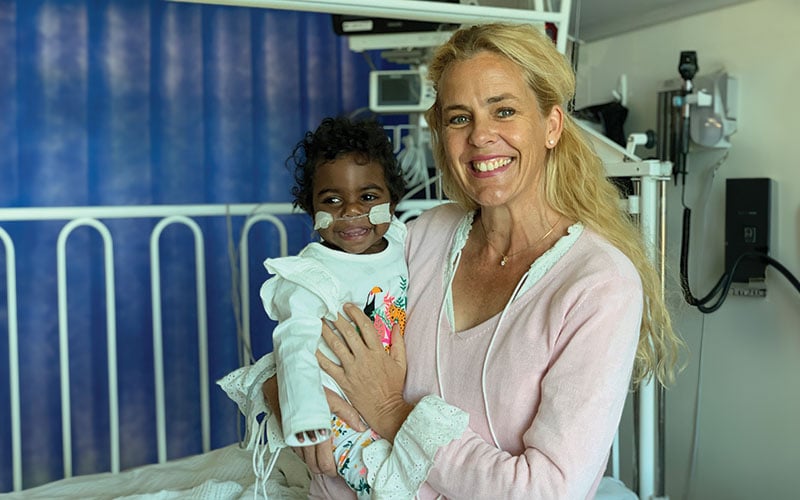
Culturally secure intervention to facilitate medical follow up for Aboriginal children, after being hospitalised with chest infections, have proven to improve long-term lung health outcomes.

A public health campaign to raise awareness about the dangers of chronic wet cough in Aboriginal children is helping to improve detection, diagnosis and management of the condition.
For those born with cystic fibrosis (CF), hyper-concentrated mucus with a dysfunctional structure significantly impacts CF airways, providing a perfect environment for bacterial colonization and subsequent chronic infection. Early treatment with antibiotics limits the prevalence of bacterial pathogens but permanently alters the CF airway microenvironment, resulting in antibiotic resistance and other long-term consequences.
SHIP-CT showed that 48-week treatment with inhaled 7% hypertonic saline (HS) reduced airway abnormalities on chest CT using the manual PRAGMA-CF method relative to isotonic saline (IS) in children aged 3-6 years with cystic fibrosis (CF). An algorithm was developed and validated to automatically measure bronchus and artery (BA) dimensions of BA-pairs on chest CT. Aim of the study was to assess the effect of HS on bronchial wall thickening and bronchial widening using the BA-analysis.
Preterm infants have immature control of breathing and impaired pulmonary gas exchange. We hypothesized that infants with bronchopulmonary dysplasia (BPD) have a blunted ventilatory response and peripheral oxygen saturation (SpO2 ) instability during a hypoxic challenge.